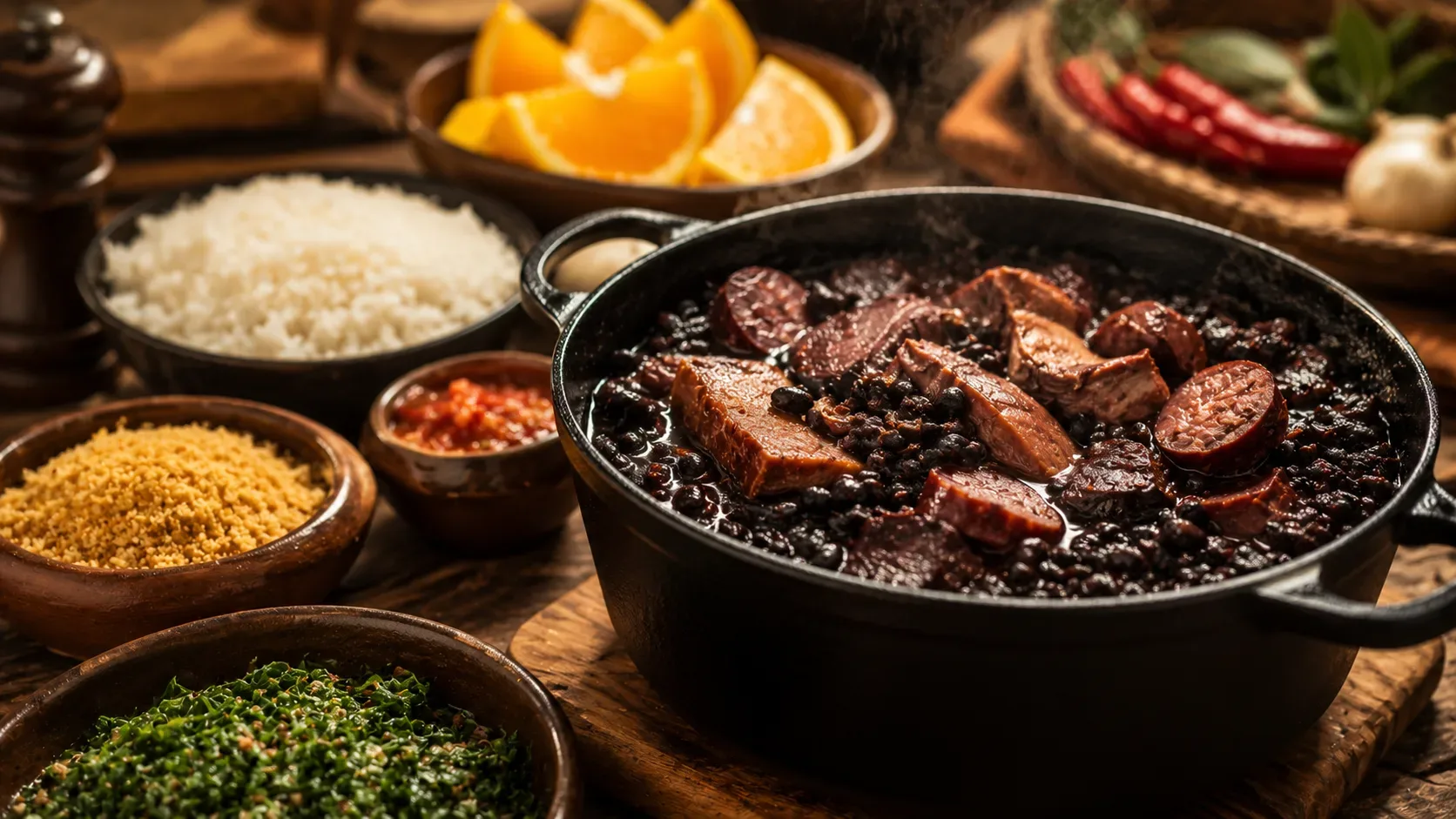
The origin of feijoada: between popular tradition and historical research
For many years, the narrative that feijoada was created exclusively by enslaved Africans using leftover meat discarded by plant owners became popular.
Although this story is part of the Brazilian popular imagination, gastronomy researchers point out that the origin of the dish is more complex.
Historians highlight that dishes based on beans and cooked meats already existed in several European countries, especially in Portugal, where preparations such as Portuguese stews combined a variety of meats with vegetables and grains.
In Brazil, these culinary models were adapted to local ingredients. Black beans, widely consumed in certain regions, began to be combined with pork cuts, seasonings and preparation techniques developed over the centuries.
Therefore, feijoada must be understood as a result of the mixture of different cultures — indigenous, African and European — that formed the Brazilian gastronomic identity.
How feijoada became a national symbol
Despite having colonial roots, feijoada gained great prominence mainly from the 19th century onwards.
Historical records indicate that restaurants in Rio de Janeiro already advertised the dish on their menus during the imperial period.
Over time, feijoada stopped being a regional food and became a national symbol, present in restaurants, family events, celebrations and specialized establishments across the country.
The so-called “feijoada day”, traditionally held on Wednesdays and Saturdays in many Brazilian restaurants, demonstrates how the dish has become incorporated into the country's social habits.
The ingredients that make a real feijoada
Traditional feijoada has countless regional variations, but some ingredients are considered classic.
Black beans
It is the main element of the dish. Its dark broth and intense flavor serve as a base for seasonings and meats.
Pork
Among the most used cuts are:
- dried meat;
- pork ribs;
- pork loin;
- paio;
- pepperoni sausage;
- pig foot;
- pig ear;
- pig tail.
The choice of ingredients varies according to family and regional tradition.
Seasoning
The characteristic flavor of feijoada is built mainly with:
- garlic;
- onion;
- bay leaf;
- pepper;
- green-smell.
Slow cooking is one of the secrets for incorporating the flavors of the meat into the beans.
Traditional Brazilian feijoada recipe
Ingredients
- 1 kg of black beans;
- 300 g of desalted dried meat;
- 300 g of pork ribs;
- 200 g of pork loin;
- 200 g of cedar;
- 200 g of Calabrese sausage;
- 4 cloves of garlic;
- 2 medium onions;
- 3 bay leaves;
- salt and pepper to taste;
- green smell to finish;
- oil or lard for sautéing.
Stream mode
1. Prepare the meat
Desalt salted meats by soaking them in water for several hours, changing the water a few times.
Cook cuts that require longer preparation time separately.
2. Cook the beans
Wash the black beans and cook them with bay leaves until the beans are soft.
3. Combine flavors
In a large pan, sauté garlic and onion until golden.
Add the meat to the beans and let it cook slowly so that the flavors are integrated into the broth.
Adjust the salt, add pepper and finish with green scent.
Traditional feijoada accompaniments
A complete feijoada is usually served with a series of side dishes that balance the intense flavors of the dish.
White rice
The rice helps absorb the broth and softens the flavor of the meat.
Farofa
The farofa adds texture and a toasted flavor that pairs perfectly with the beans.
Braised cabbage
The cabbage cut into thin strips brings freshness and a slight bitterness that contrasts with the richness of the feijoada.
Orange
Orange slices are one of the most traditional accompaniments. Its citrus flavor helps balance the fat in the meal and provides a feeling of freshness.
Chili sauce
For those who appreciate more intense flavors, the pepper sauce complements the gastronomic experience.
The cultural importance of feijoada in Brazil
Feijoada goes beyond cooking.
It is associated with family gatherings, samba circles, meetings between friends and popular celebrations.
In several regions of Brazil, feijoada has become part of the local cultural identity, being served at parties, community events and traditional establishments.
Its popularity demonstrates how gastronomy functions as a living record of a people's history.
Feijoada and its variations throughout Brazil
Like other great national dishes, feijoada has different interpretations.
Some regions prefer lighter versions, using fewer pork cuts. Others maintain more robust recipes, with a wide variety of meats.
There are also contemporary versions, such as vegetarian or vegan feijoadas, which replace meat with vegetables, vegetable proteins and seasonings capable of preserving the essence of the dish.
This ability to adapt is one of the reasons why feijoada remains current.
Conclusion
Feijoada is much more than a combination of black beans and meat. It represents the history of Brazilian cultural formation, the result of the encounter between different culinary traditions that developed over the centuries.
Its striking flavor, its presence in celebrations and its ability to bring people together around the table have transformed this dish into a true emotional heritage of national gastronomy.
To know feijoada is to know an important part of the history and identity of Brazil.